Alicia: A Typeface That Commands Attention
There are fonts that whisper, and then there are fonts that make a statement the moment they appear on the page. Alicia belongs firmly in the second category. This isn’t your everyday workhorse typeface for body copy; it’s a deliberate, artistic choice designed for moments when you need your message to land with impact and personality. If you’ve ever struggled to find a typeface that feels both creatively expressive and professionally polished, Alicia might be the missing piece in your design toolkit.
The Visual Personality Behind the Letterforms
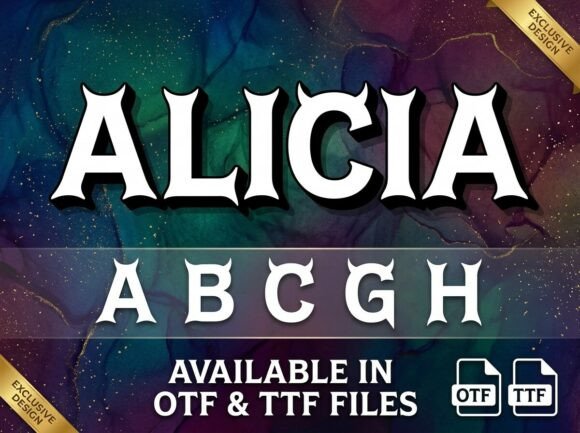
What makes Alicia immediately striking is its decorative, all-caps design. Each letter feels like a crafted element, with unique artistic flourishes that give it a strong visual voice. Think of it as a serif font with a creative twist—retaining that sense of structure and elegance, but infusing it with a character that’s hard to ignore. It’s the kind of typeface that works beautifully for a luxury brand logo, an eye-catching headline on a poster, or the title of an editorial layout. The key here is intentionality. Because it’s an uppercase-only display font, every letter is designed to be a focal point, making it particularly effective for short, powerful text where clarity and style are equally important.
Where Alicia Truly Shines: Practical Applications
Understanding where a font like Alicia fits best is about matching its personality to your project’s goals. It’s not meant for paragraphs of text, but for those critical touchpoints where first impressions are made. Here are some real-world scenarios where this premium font can elevate your work:
- Branding & Logo Design: For entrepreneurs building a brand identity from the ground up, a distinctive font can set the tone. Alicia’s bold presence makes it ideal for creating logos that need to communicate creativity, confidence, and a touch of artistry. Pair it with a clean sans-serif font for your secondary text to maintain balance.
- Packaging & Labels: On a crowded shelf, packaging needs to pop. Using Alicia for product names or key call-outs on labels, boxes, or bags can instantly draw the eye. It works particularly well for brands in beauty, artisanal food, boutique fashion, or any product where the presentation is part of the experience.
- Marketing & Social Media Graphics: In the fast-scrolling world of social media, a bold headline can stop a thumb. Use Alicia for the main title on Instagram graphics, Pinterest pins, or Facebook ads. Its strong visual personality helps your message cut through the noise and boosts audience engagement.
- Editorial & Print Design: Think magazine covers, chapter titles in a book, or the headline of a brochure. Alicia brings a level of sophistication and focus that can make a layout feel more curated and professional. It’s a fantastic tool for editorial designers looking to add a creative font to their rotation.
- Web Design & Digital Products: While it’s not for body text, Alicia can be a powerful element in website hero sections, for the titles of digital downloads like ebooks or worksheets, or as a stylized header in an email newsletter.
- Merchandise & Invitations: From t-shirt graphics to wedding invitations or event posters, this typeface adds a layer of custom artistry. It’s perfect for any project where you want the typography itself to feel like a design feature.
Integrating Alicia Into Your Design Workflow
Adding a new creative font to your library is exciting, but using it effectively requires a bit of strategy. Here’s some practical advice for making the most of Alicia and ensuring it enhances, rather than overwhelms, your designs.
Font Pairing is Everything. A decorative display font like Alicia needs a partner that complements it without competing. The general rule is contrast. Pair it with a simple, highly readable sans-serif font (like Helvetica, Open Sans, or Lato) for any supporting text. This creates a clear visual hierarchy, allowing Alicia to be the star of the show while your message remains clear and professional. Avoid pairing it with other highly stylized script fonts or handwritten fonts, as this can create visual clutter.
Readability in Context. Remember, this is a display typeface. Its primary job is to be seen and to convey a mood, not to be read in long sentences. Use it for headlines, subheadings, and short, impactful phrases. Always test your design at the size it will be viewed. A headline that looks stunning on your large monitor might become illegible when scaled down for a mobile screen or a small printed label.
Leverage the Included Files. You’ll receive both OTF and TTF files, which covers all your bases. The OTF is the professional standard, offering advanced features for design software like Adobe Illustrator or InDesign. The TTF ensures universal compatibility, so you can use it anywhere from your desktop publishing software to online platforms that accept custom uploads. This versatility is a key benefit of a well-prepared commercial font.
Consider the Commercial Aspect. If you’re a freelancer, agency, or business owner, always review the font’s licensing. A premium font like Alicia is an investment in your brand’s assets. Ensure the license you purchase covers your intended use, whether that’s for a client’s logo, merchandise you sell, or digital products you distribute. This professional step protects you and respects the work of the type designer.
Making the Strategic Choice
Choosing a font is never just about aesthetics; it’s a strategic decision that influences how your audience perceives your message. Alicia is a tool for specific jobs. It’s for the designer who wants to inject personality into a minimalist layout. It’s for the small business owner creating a brand that feels both luxurious and approachable. It’s for the content creator whose visual identity needs to be as compelling as their words.
By understanding its strengths—a bold, all-caps presence with artistic flair—and its ideal use cases, you can wield it effectively. It’s about matching the right tool to the right task. When used thoughtfully, Alicia doesn’t just display text; it communicates a feeling of creativity, confidence, and intentional design, helping you build a stronger, more recognizable visual identity across all your creative projects.