Cameron: A Display Font That Commands Attention
Every brand, project, or piece of art has a voice. Often, the most powerful part of that voice isn't what you say, but how you present it. Imagine a font that doesn't just sit quietly on a page but steps forward, introduces itself, and holds the viewer's gaze. That's the promise of Cameron, a premium display typeface crafted for moments that matter. It's not a workhorse for body text; it's the showstopper for your headline, the signature on your logo, the bold initial that turns a simple word into a visual statement.
Understanding Its Bold, Artistic Personality
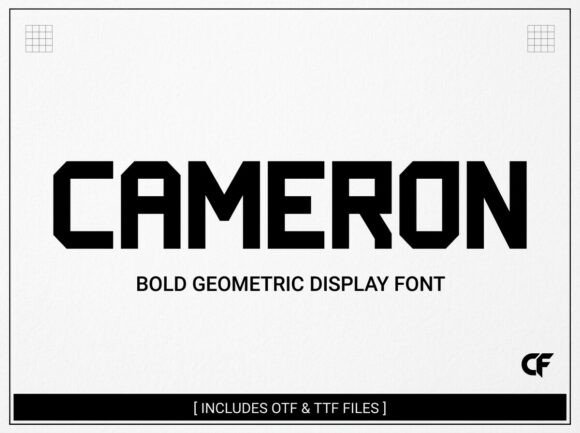
Cameron is what designers classify as a decorative display font, meaning its primary purpose is for high-impact, short-form text. Think of it as the typographic equivalent of a bespoke suit or a piece of statement jewelry. Its letterforms are infused with unique artistic elements—perhaps unexpected curves, strategic weight distribution, or subtle ornamental details—that give each character a strong visual personality. This isn't a generic serif font or a standard sans serif; it's a creative font designed to break away from the ordinary and inject immediate character into a design.
A crucial detail to note is its all-caps design. This is intentional. As an uppercase-only typeface, Cameron is engineered for situations where every letter needs to perform. It eliminates the visual rhythm of ascenders and descenders found in mixed-case text, creating a more uniform, monumental, and powerful block of text. This makes it exceptionally effective for logos, monograms, and short, punchy headlines where clarity and impact are paramount. For longer sentences or paragraphs, you'll want to pair it with a highly legible serif or sans serif font that can handle the workload of body copy.
Where This Creative Font Truly Shines
The versatility of a font like Cameron lies in its ability to adapt to various creative contexts while maintaining its core identity. Its polished yet artistic finish makes it a valuable asset across a wide spectrum of projects. For branding and logo design, it can form the cornerstone of a brand's visual identity, especially for businesses in creative industries, boutique services, or luxury markets that want to convey uniqueness and sophistication.
Consider its application in packaging design. A single word set in Cameron on a product box or label can instantly elevate the perceived value and artisanal quality of the contents. Similarly, in the realm of editorial design, it can be used for chapter titles in books, magazine covers, or pull quotes in feature articles, guiding the reader's eye and adding a layer of curated style.
The digital space is equally fertile ground. For social media graphics—Instagram carousels, Pinterest pins, or YouTube thumbnails—Cameron can create scroll-stopping visuals. On a website, it’s perfect for hero section headlines, navigation menu items, or calls-to-action that need to be unmistakably clickable. Even in digital products like e-books, workbooks, or online course materials, using it for section headers can improve visual hierarchy and make the content feel more professional and engaging.
Practical Guidance for Effective Use
Integrating a distinctive display font like Cameron into your work requires a thoughtful approach to ensure it enhances rather than overwhelms. The first step is matching typography to your project's goal. Ask yourself: What emotion or message should this headline convey? If the answer is "elegant," "creative," "bold," or "unique," Cameron is a strong candidate. For a message that needs to feel "approachable," "neutral," or "technical," a different style might be more appropriate.
Font pairing is essential. Because Cameron has such a strong personality, it works best when contrasted with a simpler, more neutral companion. A classic combination is a bold display font for headlines paired with a clean, modern sans serif for body text. Alternatively, pairing it with a traditional serif font can create a dynamic contrast between artistic flair and timeless readability. Always test your pairings in context to see how they interact visually.
Readability considerations cannot be ignored, even with a decorative font. While Cameron is designed for clarity at larger sizes, its artistic details might become muddled if used too small. Reserve it for headlines, logos, and initials where its character can be fully appreciated. Ensure there is sufficient contrast between the text color and the background, and consider the surrounding white space to let the letters breathe.
Finally, when you acquire a premium font like this, you receive professional design assets—typically OTF and TTF files. The OTF file offers advanced typographic features and is the standard for professional design software, while the TTF file ensures broad compatibility across different operating systems and applications. Understanding these commercial licensing considerations is also key; ensure the license covers your intended use, whether for personal projects, client work, or merchandise sold commercially.
Elevating Your Visual Communication
Choosing the right typeface is a fundamental aspect of building a cohesive brand identity. A font like Cameron contributes directly to visual consistency. By using it consistently across your logo, website headers, social media templates, and print materials, you create a recognizable visual signature that reinforces brand recognition. This consistency makes your marketing assets look more professional and deliberate, which in turn builds trust with your audience.
Ultimately, the goal is audience engagement. A well-chosen, striking font can make your content more memorable and shareable. It transforms a simple announcement into an event, a product name into a brand, and a headline into an invitation. By carefully selecting and applying a typeface with the distinct personality of Cameron, you’re not just filling space on a page—you’re making a conscious decision about how your project is perceived, ensuring it leaves a lasting and positive impression.