Imogen: A Typeface That Commands the Room
There are typefaces that whisper, and there are typefaces that announce their presence the moment they hit the page. Imogen belongs firmly in the latter category. This is a decorative display font built for creators who refuse to blend into the background. Every letterform carries a distinct artistic weight, with unique visual elements that give each character its own personality. If you have ever struggled to find a typeface that feels genuinely different from the sea of minimalist sans serifs and predictable scripts, Imogen offers a refreshing alternative that prioritizes character over conformity.
Understanding Imogen's Visual Identity
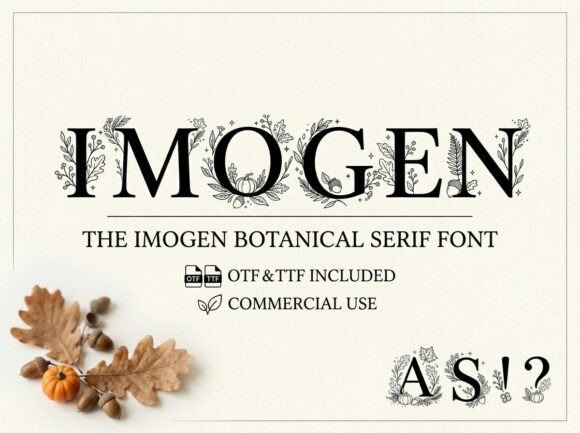
Imogen is not a workhorse font designed for body copy or lengthy paragraphs. It is a purpose-built display typeface, meaning it shines brightest when used sparingly and at larger sizes. The design features strong visual personality through its carefully crafted letterforms, each one treated as a small piece of art rather than a simple functional character. This approach gives the font a handcrafted quality that feels intentional and premium without veering into overly ornate territory.
One important detail worth noting early: Imogen is an all-caps typeface. It does not include lowercase letters. This is a deliberate design choice, not a limitation. All-caps display fonts have a long history in editorial design, poster art, and branding precisely because uppercase letterforms tend to carry more visual weight and symmetry. When every letter is designed to stand tall, the overall effect is cohesive and commanding. For projects where you need that uppercase energy, such as logos, monograms, hero sections, or event invitations, this characteristic becomes a genuine strength.
Where Imogen Truly Shines
The practical applications for a font like Imogen are surprisingly broad once you understand its strengths. Think about the last time a logo caught your eye from across a room, or the way a movie poster title made you want to read the fine print. Display fonts like Imogen create that initial visual hook that draws people in.
Branding and Logo Design: If you are building a brand identity for a boutique business, a creative studio, or a lifestyle product, Imogen can serve as the typographic cornerstone. Its distinctive character helps brands stand apart from competitors relying on the same handful of popular fonts. Pair it with a clean sans serif for body text, and you have a visual system that feels both expressive and professional.
Packaging Design: On shelf or screen, packaging needs to communicate personality in seconds. Imogen works beautifully for product names, flavor labels, or brand marks on packaging for artisan goods, cosmetics, food products, or specialty items. The all-caps format ensures legibility at a glance while the decorative elements add a layer of sophistication.
Social Media and Digital Content: Instagram stories, Pinterest pins, YouTube thumbnails, and TikTok overlays all benefit from bold typographic choices. Imogen gives your graphics a distinctive look that helps with brand recognition across platforms. When followers see that typeface, they should immediately connect it with your content.
Print Materials and Merchandise: Posters, event flyers, business cards, tote bags, stickers, and apparel all respond well to display typography. Imogen's artistic quality makes it suitable for merchandise where the text itself becomes part of the visual design rather than purely informational.
Invitations and Editorial Layouts: Wedding invitations, magazine headers, book chapter titles, and event programs often call for typefaces that feel special. Imogen fills that role without requiring custom hand-lettering, saving time while still delivering a premium aesthetic.
Practical Guidance for Working with Display Fonts
Choosing the right typeface is only part of the equation. How you use it matters just as much. Here are some grounded recommendations for getting the most out of Imogen or any display font in your projects.
Respect the hierarchy. Display fonts are designed for headlines, titles, and focal points. Resist the temptation to set entire paragraphs in Imogen. Instead, use it for the words that need to carry the most visual weight, then pair it with a more neutral typeface for supporting text. A classic serif or a geometric sans serif often makes an excellent companion.
Test your pairings. Before committing to a font combination, mock up a few variations. Place Imogen next to different body fonts and see which pairing feels balanced. You want contrast without conflict. If Imogen is doing the heavy lifting visually, your secondary font should step back and support quietly.
Consider your audience. A playful craft brand might use Imogen differently than a luxury jewelry line. Context shapes perception. Think about who will see your design and what emotional response you want to create. The same font can feel whimsical or elegant depending on color, spacing, and surrounding design elements.
Mind the spacing. All-caps typefaces often benefit from slightly increased letter spacing. Adding a touch of tracking can improve readability and give the text room to breathe, especially at smaller display sizes. Experiment with spacing to find the sweet spot for your specific use case.
What You Receive and Licensing Considerations
When you acquire Imogen, you receive both an OTF file and a TTF file. The OTF format is the professional standard, offering advanced typographic features and broad compatibility with design software like Adobe Creative Suite, Affinity Designer, and Figma. The TTF format ensures universal compatibility across operating systems and applications, making it a reliable fallback for less specialized tools or when sharing files with collaborators who may not have professional design software installed.
Before purchasing any font for commercial use, always review the licensing terms. Understanding whether the license covers your intended use, whether that is a single client project, unlimited commercial work, merchandise production, or digital product creation, protects both you and the font designer. Reputable font marketplaces typically provide clear licensing information, and it is worth reading those details before finalizing your purchase rather than assuming coverage.
Building Visual Consistency Across Projects
One of the most overlooked benefits of selecting a distinctive typeface early in a project is the consistency it brings to your entire visual system. When Imogen becomes part of your brand toolkit, every touchpoint that uses it, from your website hero section to your Instagram graphics to your product labels, shares a common visual thread. This repetition builds recognition. Over time, your audience begins to associate that typographic style with your brand before they even read the words.
This is particularly valuable for small businesses and independent creators who may not have massive marketing budgets. A strong, recognizable typeface choice costs a fraction of a full rebrand but can deliver outsized returns in how polished and memorable your brand appears. Typography is one of those subtle design decisions that communicates professionalism and intentionality, even when people cannot articulate exactly why your materials look more refined than the competition.
Finding the Right Fit for Your Creative Vision
Not every font suits every project, and that is perfectly fine. Imogen is ideal when you want your typography to do more than simply convey information. It is for the moments when text needs to become a design element in its own right, when a headline should feel like a visual experience, when a logo needs to carry personality in every curve and stroke.
If your project calls for something understated and minimal, there are plenty of excellent sans serif and serif options available. But when you need something with presence, something that feels handcrafted and intentional without sacrificing professional polish, Imogen deserves a place on your shortlist. Download the files, test it in your next project, and see how the right display typeface can transform a flat layout into something that genuinely captures attention.