Inject Raw Energy into Your Next Project
Let’s be honest: the digital landscape is crowded. When you are designing a YouTube thumbnail, a poster for a local gig, or branding for a new streetwear label, the biggest challenge isn't finding a font—it’s finding a voice that doesn't sound like everyone else. We have all seen the sleek, minimalist sans-serifs that dominate corporate branding, but sometimes, that polished look feels too sterile. Sometimes, you need something that feels lived-in, a bit rough around the edges, and undeniably loud. If you are looking to break the grid and grab attention instantly, you might be looking for a typeface that brings the noise. This is where the raw power of a display font like THRILL comes into play.
Understanding the Raw, Handmade Aesthetic
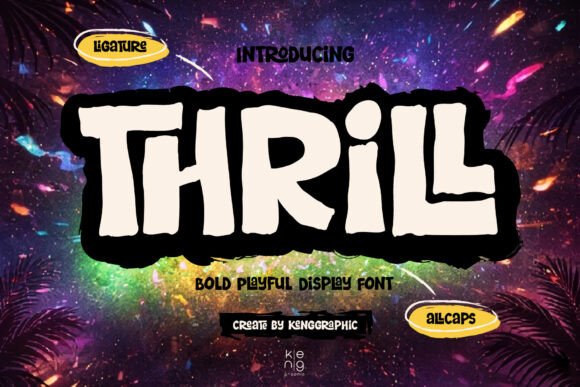
Typography is about more than just letters on a page; it is about the texture and personality those letters convey. A serif font might whisper tradition and respectability, while a clean sans-serif shouts efficiency and modernity. THRILL, however, does something different. It screams. It is a bold, playful display font designed with a distinct "raw" edge. By "raw," we mean it embraces the imperfections of hand-drawn design. The shapes are organic and slightly irregular, mimicking the stroke of a marker or a spray paint can. This style injects immediate high energy into a layout, making it an ideal choice for projects that need to feel human, rebellious, and alive.
What makes this typeface particularly interesting from a design perspective is how it balances that chaos with structure. While the shapes are imperfect, the design is built for legibility at large sizes. It features built-in ligatures—special characters that join letters together in a more natural, flowing way. This creates a smoother dynamic flow, preventing the text from looking choppy. For designers, this means you get the "messy" look of street art without sacrificing the readability required for branding. It is a tool that allows you to make a statement without having to manually adjust every single letter to make it look right.
From Streetwear to Packaging: Where to Use a High-Energy Font
Knowing when to use a font like THRILL is just as important as knowing how to use it. Because of its bold nature, it functions best as a headline or accent font rather than for long blocks of body copy. It thrives in environments where you have milliseconds to capture a viewer's attention.
Consider the world of streetwear and merchandise. This industry relies heavily on visual impact and cultural relevance. A font that looks like it was pulled from a 90s skate magazine or a gritty urban mural fits perfectly here. You can use it for t-shirt graphics, hoodies, and tote bags where the typography itself is the primary design element. Similarly, in packaging design, especially for products targeting a younger demographic—like energy drinks, craft beers, or artisanal snacks—this font style helps differentiate the product on the shelf. It suggests that the product inside is fun, energetic, and not part of the boring establishment.
Beyond physical goods, the digital space is a playground for this aesthetic. YouTube thumbnails and social media graphics are prime real estate for bold typography. Algorithms favor content that gets clicks, and bold, high-contrast text is proven to increase click-through rates. If you are a content creator or a social media manager, using a font with this much personality can help establish a consistent visual identity that followers recognize instantly as they scroll through their feeds. It turns standard marketing assets into eye-catching posters.
Building a Brand Identity with Personality
For small business owners and entrepreneurs, choosing a typeface is a critical part of defining your brand identity. If your brand voice is loud, confident, and a little irreverent, your typography needs to match that. A standard Helvetica or Times New Roman might send the wrong message, making a bold brand feel generic.
Using a premium font like THRILL allows you to build a visual system that stands out. Imagine a logo design for a music festival, a podcast about extreme sports, or a boutique marketing agency that specializes in viral campaigns. In these contexts, the font does the heavy lifting of establishing the mood. It tells your audience immediately that you are different. However, a word of advice on logo design: while a display font provides a great starting point, it is often wise to customize the kerning (spacing) or combine it with a unique icon to ensure your logo is truly one-of-a-kind.
Practical Tips for Pairing and Usage
One of the most common questions regarding display fonts is, "What do I pair it with?" Because THRILL is so expressive, it can easily overwhelm a design if not balanced correctly. The golden rule of typography is contrast. You generally want to avoid pairing two highly decorative fonts together, as they will compete for attention.
Instead, pair your high-energy display font with something neutral and clean. A geometric sans serif font works exceptionally well for body text or subheadings. The clean lines of the sans-serif will provide a resting place for the eye, allowing the THRILL headers to pop without causing visual fatigue. For example, if you are designing a poster, use the bold font for the main event title and a simple sans-serif for the date, time, and location details. This hierarchy ensures that the information is communicated effectively while maintaining that high-octane aesthetic.
Another practical consideration is the medium. If you are working on web design, keep in mind that while display fonts look amazing on desktop screens, they can become difficult to read on smaller mobile devices if the text size is too small. It is best reserved for desktop headers or hero images where it can be rendered at a large size. For editorial design or print materials like magazines and brochures, this font shines in pull quotes or feature article titles, breaking up the monotony of standard body copy and drawing the reader's eye to key sections.
Final Considerations: Licensing and File Formats
Before you finalize your project, always double-check the technical details. When purchasing a commercial font, you need to ensure the license covers your specific usage. Are you using it for a single client? Are you using it for print-on-demand merchandise? Are you using it in a digital product you intend to sell? These distinctions matter. Ensure you have the correct license to avoid legal headaches down the road.
Furthermore, check what is included in the font package. A high-quality font family often includes multiple weights or styles (like italic or outline versions). However, for a raw, handmade font, you might find stylistic alternates or extra ligatures included. Taking the time to explore the glyph panel in your design software (like Adobe Illustrator or Photoshop) can reveal hidden gems—alternative letterforms that can make your text look even more custom and hand-crafted.
Ultimately, typography is a balancing act between aesthetics and function. You want your design to look incredible, but it also has to work. Whether you are designing for a client, launching your own brand, or creating a digital product, choosing a typeface that embodies the energy of your project is the first step toward success. Don't settle for boring. Find the font that captures the vibe you are going for and let it do the talking. Make it loud. Make it stand out.