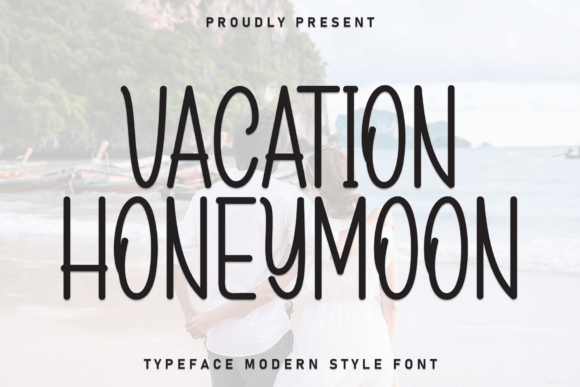
Meet Vacation Honeymoon: The Font with Instant Charm
There’s a specific feeling you get when you crack open a handwritten note from a close friend or find a vintage postcard at a flea market. It’s warm, personal, and unapologetically human. In a digital landscape often dominated by sterile sans-serifs and rigid grid systems, capturing that feeling can be the difference between a design that gets scrolled past and one that stops someone in their tracks. That is the exact energy we are channeling today with a typeface that feels less like a digital asset and more like a handwritten letter from someone you love. We are talking about a charming, personable handwritten display font that is poised to infuse a touch of amicable sweetness into any project.
This isn't just another script font trying to mimic cursive. It is a typeface blessed with adorable charisma, designed to bridge the gap between playful whimsy and professional legibility. If you are a designer, a small business owner, or a creative entrepreneur looking for a typeface that breathes life into your brand, you might just find your new best friend here. Let’s explore how to wield this tool effectively to craft wedding invitations, personalized cards, or any design explorations that are seeking a playful twist.
The Anatomy of a Friendly Typeface
When we talk about typography, we are often talking about the "voice" of a design. A serif font might whisper "tradition and authority," while a geometric sans-serif might shout "modernity and efficiency." This particular display font, however, speaks with a giggle. Its visual characteristics are defined by a fluid, organic structure that mimics the natural inconsistencies of human handwriting.
Unlike rigid digital typefaces, the letterforms here dance. They have a bouncy baseline and varying stroke widths that add a layer of texture and depth to the page. This is what we mean by "personable." It feels approachable. It doesn't look like it was generated by an algorithm; it looks like it was drawn by a human hand holding a favorite marker or brush pen. This organic quality is essential for brands that want to establish an emotional connection with their audience. It signals that there is a real person behind the business, ready to engage in a friendly conversation.
Where Fun Meets Function: Real-World Applications
The versatility of a handwritten premium font like this is often underestimated. While it is undeniably perfect for personal stationery, its utility in commercial and creative projects is vast. The key is understanding where the "fun" aspect of the font serves the "function" of your communication goals.
Consider the world of packaging design. If you are selling artisanal goods—perhaps homemade jams, organic skincare, or boutique candles—a sterile label can feel cold. Using this font for your logo design or flavor descriptions can instantly communicate the handmade nature of the product. It tells the customer, "I made this with care."
Similarly, in the realm of social media graphics, attention is the currency. A bold, handwritten header on an Instagram post or a Pinterest pin can break the monotony of the feed. It adds a layer of personality that static text simply cannot achieve. It is perfect for quotes, call-to-actions, or highlighting a sale in a way that feels inviting rather than aggressive.
Here are a few other specific scenarios where this typeface shines:
- Wedding Invitations & Event Stationery: It creates an immediate sense of intimacy and celebration, perfect for save-the-dates or thank you cards.
- Blog Headers & Editorial Design: Use it to break up long blocks of text and add visual hierarchy. A handwritten subheading can make a lifestyle blog feel more personal and relatable.
- Digital Products: If you are selling e-books, planners, or online courses, using this font for cover titles or section breaks can make the digital product feel more tangible and valuable.
- Merchandise: Tote bags, mugs, and t-shirts often rely on typography. A friendly, handwritten style makes merchandise feel like a piece of art rather than just a logo slapped on fabric.
Strategic Typography: Beyond Aesthetics
While the visual appeal of a creative font is important, we must also discuss strategy. Choosing a font is not just about what looks "pretty"; it is about what works. As a designer or business owner, your goal is to improve visual consistency and brand recognition. How does a playful handwritten font fit into a professional presentation?
The secret lies in contrast and hierarchy. You generally would not write a 500-word blog post entirely in a handwritten display font—the readability would suffer, and the reader’s eyes would tire quickly. Instead, you use it as a highlighter. Use this font for your H1 and H2 headers to grab attention, then pair it with a highly legible serif font or sans serif font for the body copy.
This approach achieves two things:
- Readability: Your message remains clear and easy to digest.
- Engagement: The headers draw the eye, while the body text delivers the information.
Think of the handwritten font as the "emote" in your visual language. It carries the emotion, while your body font carries the logic. This balance ensures that your brand identity feels both relatable and trustworthy. When testing font pairings, look for a sans-serif that has a similar x-height or weight to ground the whimsy of the handwritten script. A clean, modern sans-serif often provides the perfect counterbalance to the organic curves of a script font.
Practical Tips for Implementation
Before you dive into your next project, there are a few practical considerations to keep in mind to ensure you get the most out of this typography asset.
Review the Styles: High-quality premium fonts often come with different weights or stylistic alternates. Does the font include a bold version for extra emphasis? Are there different ways to write the lowercase 'g' or 's'? Exploring these alternates can help you customize the text to fit the specific flow of your design, making it look even more unique.
Licensing Matters: If you are using this for a client project or selling merchandise, you must pay close attention to the commercial licensing. Ensure that the license covers the specific usage you have in mind, whether it's for print-on-demand merchandise or a digital logo. Respecting licensing not only keeps you legal but supports the type designers who create these beautiful tools.
Spacing is Key: Handwritten fonts can sometimes appear tighter or looser than standard typefaces. Always check your tracking (letter spacing) and leading (line spacing). Sometimes, opening up the letter spacing just a few points can drastically improve the legibility and elegance of the text, especially at smaller sizes.
Dance in Delight with Your Design
Ultimately, design should be an enjoyable process. It is about solving problems, yes, but it is also about expression. Introducing a typeface like this into your toolkit is an invitation to loosen up, to be a little more human, and to connect with your audience on a visceral level. Whether you are designing a wedding invitation for a close friend or crafting a branding package for a new startup, the goal is to make the viewer feel something.
This font is the epitome of fun meeting function. It doesn't take itself too seriously, yet it is crafted with enough precision to be a reliable workhorse for your creative needs. So, go ahead. Experiment with it. Mix it with bold geometric shapes or pair it with vintage photography. See how the "adorable charisma" transforms your layout. In a world of rigid digital perfection, a little bit of handwritten sweetness might be exactly what your next project needs to stand out. Dance in delight with its friendly demeanor, and watch your designs come alive.